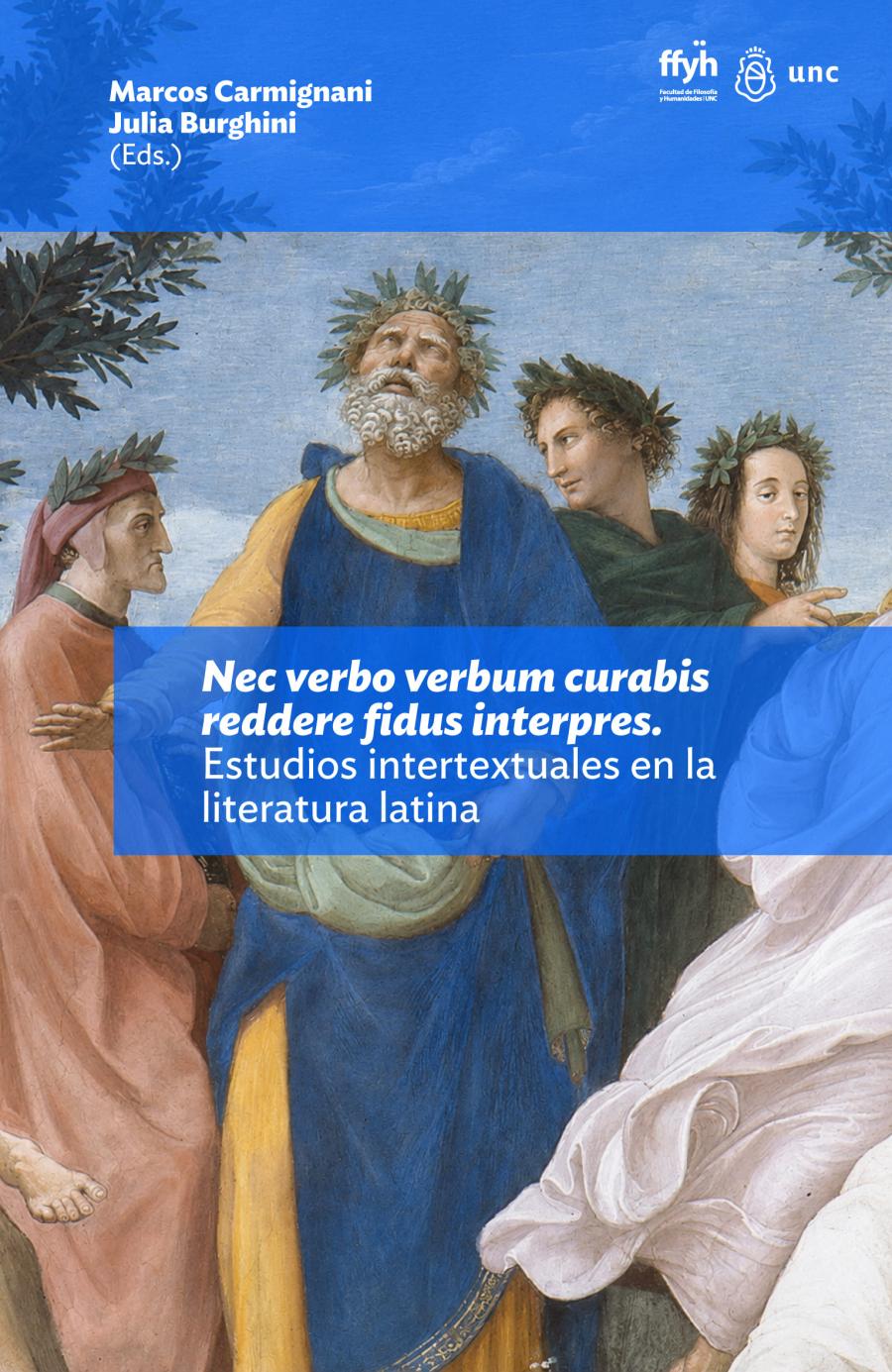
Nec verbo verbum curabis reddere fidus interpres. Estudios intertextuales en la literatura latina
Keywords:
Intertextuality, Latin LiteratureSynopsis
This book brings together a series of essays aimed at offering new interpretive perspectives on literary allusion. Far from being reduced to a mere game among writers, allusion is revealed here as an essential mechanism of literature and a genuine sociocultural phenomenon, one that requires the active participation of an attentive reader capable of recognizing the historical and social context in which the author and his or her work are situated. When the reader recognizes an allusion, they are reading at least two texts simultaneously within a single sentence or expression, which opens up two possible worlds, each with its own literary and sociocultural context. Allusion thus requires the active interpretive cooperation of the reader.
Chapters
-
Introduction
-
Virgil, Catullus, Callimachus: a “scandalous” allusion and its many interpretations
-
Juno, the Dissident Narrator: Contributions to a Metapoetic Reading of the *Aeneid*, Books 1 and 7
-
The Intersection of Physiognomy and Literary Tradition in the Pallor of Socrates and Other Characters in Apuleius’ Metamorphoses
-
Ineffable Forms of Desire: The Appropriateness of Erotic Discourse in Ausonius’s *Epigrams*
-
Proba, from Juvenco to Virgil: A Proposal for Intertextual Triangulation Centered on the Theme of Food in the Centon
-
Intertextual Dimensions of Cupid in Draconcio’s *Medea*
-
A “Catullian” Imitation? in Ianus Secundus’s *Basia*: An Analysis of Carmina 1 and 2
Downloads
Published
Series
Categories
License

This work is licensed under a Creative Commons Attribution-NonCommercial-ShareAlike 4.0 International License.